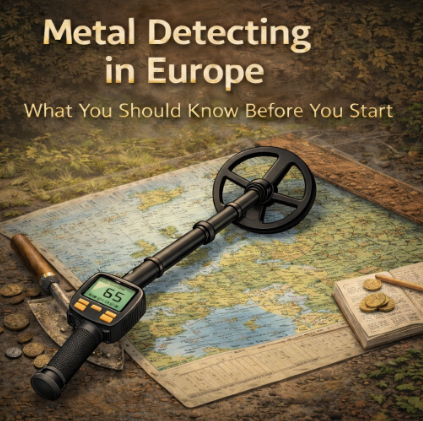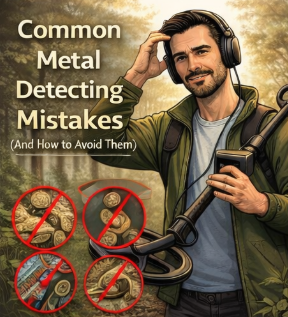

Metal Detecting in Europe: What You Should Know Before You Start
Metal detecting in Europe is one of the most rewarding hobbies—but also one of the most regulated. Each country has its own laws, cultural heritage protections, and rules that every detectorist must understand before stepping into the field.
Ignoring regulations doesn’t just risk fines—it damages the hobby for everyone.
This guide explains what you need to know before you start metal detecting in Europe.
1. Laws and Regulations Vary by Country
Europe does not have unified metal detecting laws.
Some countries require permits or licenses
Others allow detecting only on private land with written permission
Certain areas (archaeological sites, historical zones, beaches) are often strictly forbidden
Always research:
National heritage laws
Local municipality restrictions
Reporting obligations for historical finds
Tip: Contact local detectorist communities—they usually know the real rules.
2. Reporting Finds Is Mandatory in Many Countries
In several European countries:
Valuable or historical finds must be reported
Some countries offer compensation
Others classify finds as state property
Failing to report discoveries can lead to:
Heavy fines
Equipment confiscation
Permanent bans
Responsible detecting protects history—and the future of the hobby.
3. Choosing the Right Detector for European Conditions
Europe presents:
Mineralized soils
Iron contamination
Centuries of human activity
Key features to look for:
Good iron discrimination
Stable ground balance
Multi-frequency or well-tuned single-frequency performance
Using the wrong detector will result in:
Constant false signals
Missed targets
Frustration
4. Ethics Matter
Good detectorists:
Fill their holes
Respect landowners
Avoid sensitive sites
Share knowledge responsibly
Bad behavior leads to tighter regulations for everyone.
Conclusion
Metal detecting in Europe is deeply rewarding—but only when done legally and responsibly. Knowledge is your most important tool, even more than the detector itself.